What Are 4 Signs Your Sewer Line Is Broken? (Little Rock Homeowner Guide)
If you're asking what are four signs that your sewer line is broken, this guide gives you the plain answer. We're Diamond State Plumbing, a family-run team of licensed plumbers here in Little Rock. You'll learn what each sign looks like, smells like, and sounds like, so you know when it's time to call us.
A broken sewer line won't fix itself. In the Heights and Hillcrest, the problem we find most often is a collapsed line. It's usually old Orangeburg or clay pipe that has pulled apart. Waiting can lead to sewage backups inside your home, water damage, and soggy or sinking spots in your yard.
First, we'll walk you through the 4 signs and show you how to tell a clog from a real break. Then we'll cover what to do right now, why sewer lines break in Little Rock homes, how we find and fix them, and what it costs.
What Are Four Signs That Your Sewer Line Is Broken?
- Many drains back up at once. When your toilets, tub, and sinks all drain slowly together, the problem is likely in the main line.
- You smell sewage. A rotten egg smell inside your home or in your yard means sewer gas is escaping through a crack.
- Your yard has wet or sunken spots. Leaking sewage soaks the soil, and the ground above a broken pipe can dip.
- Drains gurgle, or water rises in the tub. If flushing the toilet makes water come up in the shower, waste can't get past the break.
The 4 Signs Your Sewer Line Is Broken
1. Many Drains Back Up at Once
Your toilets, tub, and sinks all drain slowly at the same time. You may also hear gurgling from your drains.
This happens because every drain in your house empties into one main sewer line. When that line is broken or blocked, waste has nowhere to go. One slow sink is usually a local clog, but slow drains everywhere point to the main line.
2. You Smell Sewage
You notice a rotten egg smell near your drains, in your bathroom, or out in your yard.
That odor is sewer gas escaping through a crack or gap in the pipe. Don't trust your nose alone, though. At high levels, sewer gas can dull your sense of smell within minutes.
3. Wet or Sunken Spots in Your Yard
You see a soggy patch when it hasn't rained, or a new dip in the ground. These spots often sit right above where your sewer line runs.
Leaking sewage soaks the soil around the pipe. When a line collapses, the ground above it can start to sink.
4. Drains Gurgle or Water Rises in the Tub
Your drains bubble or gurgle after you flush or run water. Sometimes dirty water comes up in the tub or shower when you flush the toilet.
Watch your tub, shower, and floor drains. When waste can't get past a break, it often comes back up there.
What our customers notice first: Most Little Rock homeowners call us when sewage stops draining. It usually backs up into the tub, the toilet, or whatever drain sits lowest in the house.
Other Warning Signs to Watch For
- Rats or roaches show up suddenly. Pests can get in through breaks in an old sewer line. Rats can even climb up through floor drains and toilets.
- Clogs that keep coming back. If a drain backs up again a few weeks after it was cleared, the pipe itself may be damaged.
Quick check:
Run water in your tub, then flush the toilet. If water rises in the tub or a floor drain, your main line may be blocked or broken.Clogged Sewer Line or Broken Sewer Line? How to Tell the Difference
| What you notice | Likely a clog | Likely a broken line |
|---|---|---|
| Which drains back up | One drain, or all drains if the main line is clogged | All drains |
| After the line is cleared | It stays clear | It backs up again within weeks |
| Your yard | No change | Wet or sunken spots |
| Sewage smell outside | Usually not | Often |
One slow sink is almost always a local clog. When every drain slows down, the problem is in your main line. If clearing that line only works for a few weeks, the pipe is likely cracked, collapsed, or full of roots.
The only way to know for sure is to look inside the pipe. A camera inspection shows us roots, cracks, and collapsed sections before anyone digs. If every drain in your house is backing up, start with our main sewer line clog page. To see exactly what's wrong, book a camera sewer line inspection in Little Rock.
What Happens When a Sewer Line Breaks (and What to Do Right Now)
If you think your sewer line is broken, do these four things:
- Stop using water. Hold off on flushing, showers, laundry, and the dishwasher until a plumber checks your line.
- Keep kids and pets away. Sewage carries germs, so stay clear of any backed-up water.
- Find your sewer cleanout. It's a pipe with a cap, usually in the ground near your house. Don't open it, but know where it is so we can reach your line fast.
- Call a plumber. A camera inspection will show what's wrong and where.
If sewage is pouring into your home fast, the city's main line may be blocked instead of yours. Call the Little Rock Water Reclamation Authority's 24/7 emergency line at 501-223-1509.
Why Sewer Lines Break in Little Rock Homes
Here's what causes most breaks:
- Old pipe materials. Orangeburg pipe is made of plant fibers soaked in tar, and it was common from the 1950s to the early 1970s. Over time, soil pressure squeezes it flat until it collapses. Clay pipe joints can separate as the pipe ages.
- Tree roots. Roots grow toward water and push into cracks and loose joints. As they grow, they block the pipe and break it open wider.
- Shifting ground. Parts of Arkansas have expansive clay soil that swells when wet and shrinks when dry. When the ground moves, old pipe joints can shift and crack.
- Grease and wipes. Cooking grease hardens inside the pipe, and wipes don't break down. Both build up and put extra strain on an aging line.
| Pipe material | What to expect |
|---|---|
| PVC or ABS plastic | 50 to 80 years |
| Cast iron (underground) | 50 to 60 years |
| Clay | Joints can separate and let roots in as the pipe ages |
| Orangeburg | Known to flatten and collapse over time |
These numbers are home inspector life expectancy guidelines, not guarantees. Roots and ground movement can shorten any pipe's life.
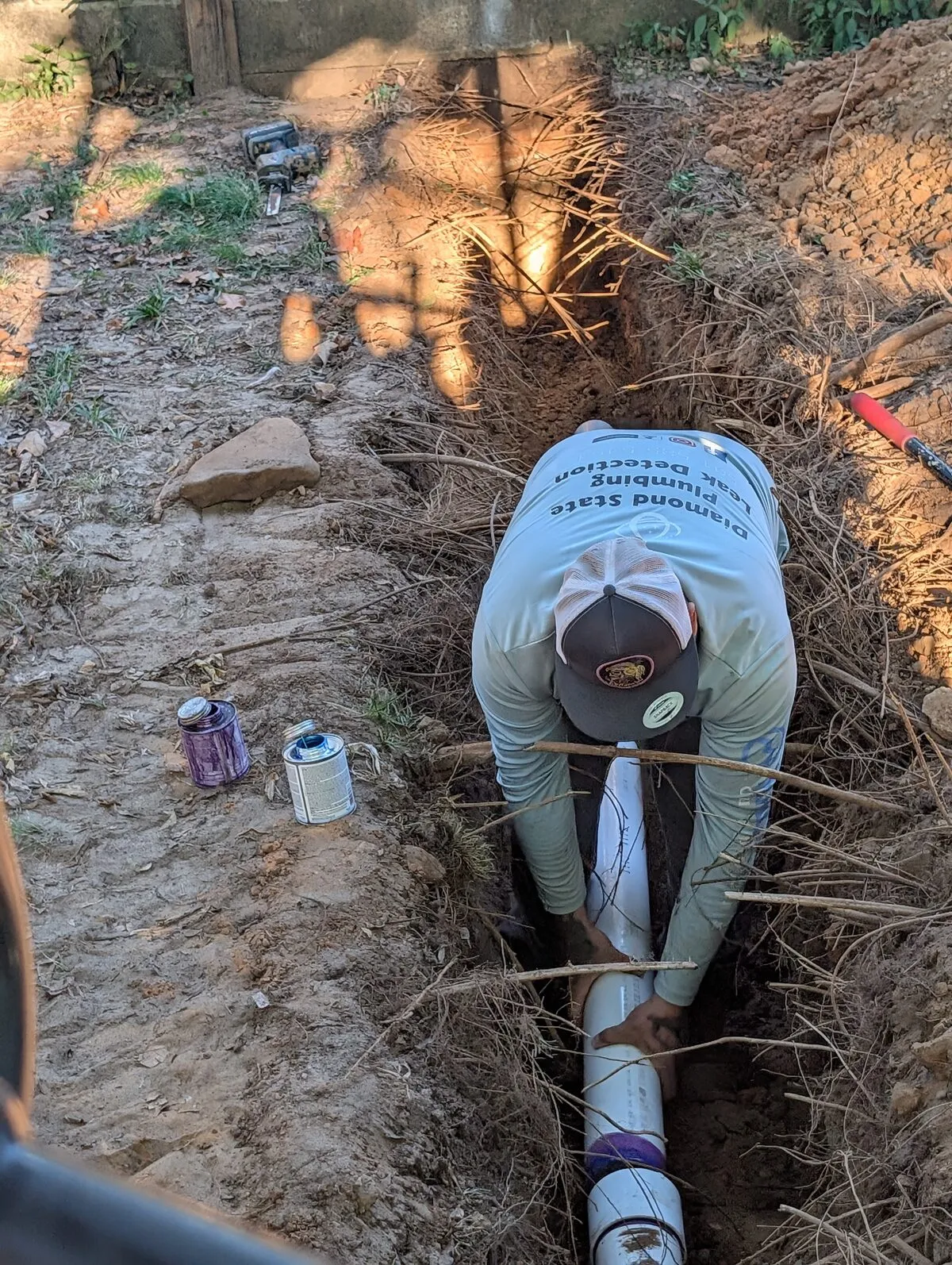
How a Plumber Finds and Fixes a Broken Sewer Line
During a camera inspection, we feed a small camera on a flexible cable into your sewer line, usually through your cleanout. If you don't have one, we may need to pull a toilet or go in through the roof vent. You can watch on our screen as the camera moves toward the street. We'll point out roots, cracks, sagging spots, or sections that have pulled apart, then explain your options before any work starts.
Here's how the work usually goes:
- Camera inspection. We find the damage on camera first, so we know what we're fixing before we dig.
- Sewer line locating. We find where the problem sits and how deep it is, so we know exactly where to dig.
- Repair or replace. If one section is damaged and the rest is solid, a spot repair may be enough. If the line has collapsed, is damaged in many places, or is old Orangeburg or clay, a full replacement is usually the better fix.
- Hydro jetting for roots. When roots or grease are the main problem and the pipe is still solid, our hydrojetter clears the line with high-pressure water.
We've done trenchless repairs over the years. But pulling a new line through a 50-plus-year-old pipe, or lining it with chemicals, can lead to problems down the road. Digging is the method we trust enough to put our warranty on.
How long it takes. A spot repair usually takes about a day. We open at least 10 feet of ground so a technician can get down in the trench, cut out the bad section, and connect new pipe. Utility lines in the way can add time.
A full replacement usually takes 8 to 36 hours from start to finish. On a smaller home, plan on 8 to 24 hours. Trees, fences, and sprinkler systems along the line can slow the work.
If your pipe can't be saved, we'll walk you through your options. We'll tell you what we'd do if it were our own home.
If a camera shows damage, see our sewer repair in Little Rock page. For collapsed or worn-out lines, learn more about sewer line replacement.
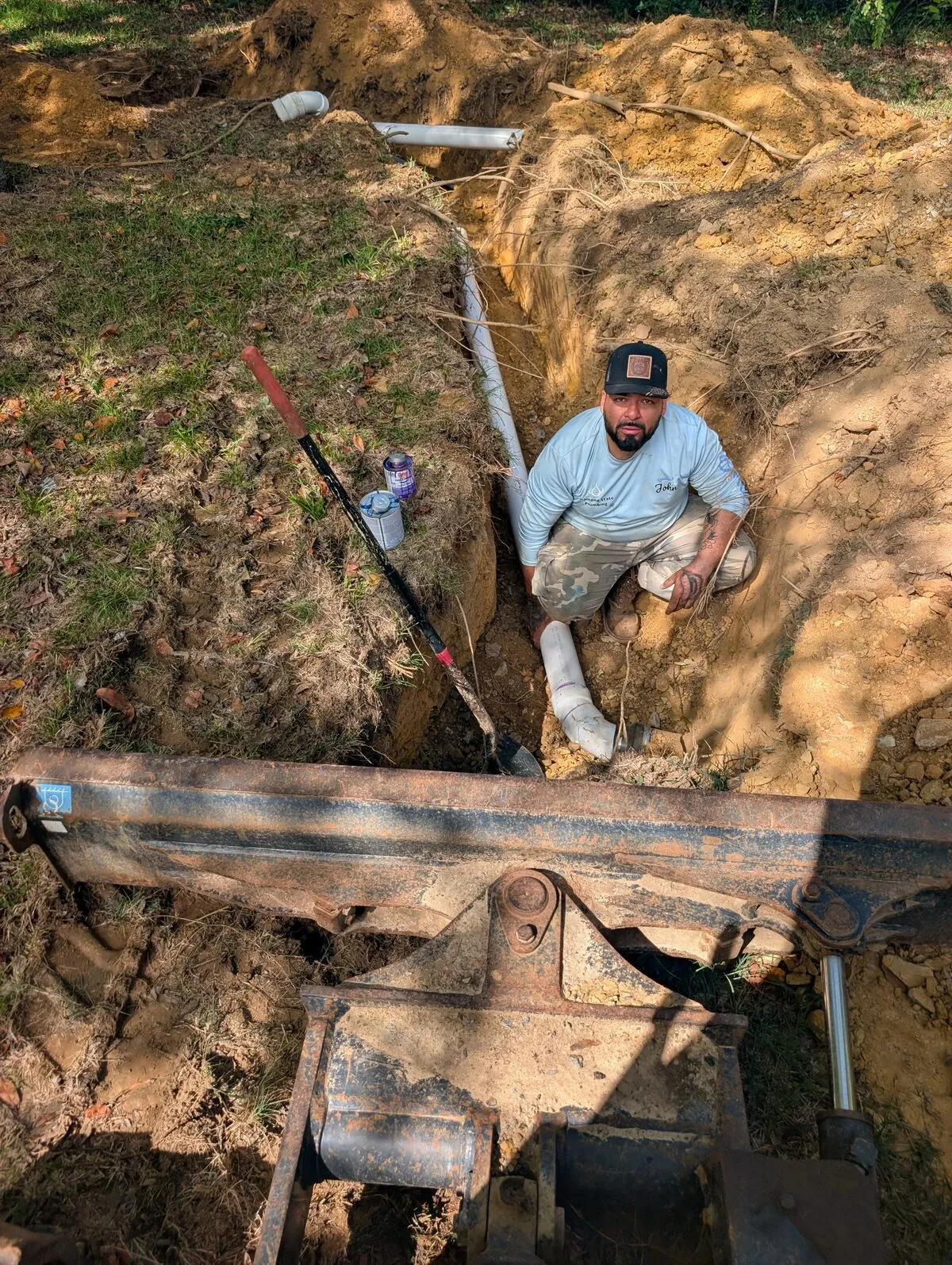
Sewer Line Repair Cost, Insurance, and Permits in Little Rock
- How long and how deep your line is
- What the pipe is made of
- Driveways, trees, fences, or retaining walls in the path
- Gas, phone, or fiber optic lines we have to work around
- Whether you need a spot repair or a full replacement
Who pays, you or the city? In Little Rock, the sewer service line on your property is yours. You're responsible for repairing or replacing it when it fails.
Will insurance cover it? Usually not. Standard homeowners policies rarely cover clogs or pipes that wear out with age. Damage from a sudden event, like a fallen tree, is more likely to be covered. Most insurers sell sewer backup coverage as an add-on for a small cost, so check your policy.
Do you need a permit? Yes. Replacing a sewer line in Little Rock requires a permit through LRWRA before work starts. A master plumber or the property owner must get it, and our owner, Angel Bahena, is a master plumber.
💰 LRWRA Can Pay You Back Up to $2,500
LRWRA's Sewer Service Line Replacement Program reimburses up to $2,500 when you replace your whole sewer line. Here's how it works:- You must own a single-family home, be an LRWRA customer, and have a water meter 3/4 inch or smaller.
- It covers full replacements only, not spot repairs.
- You apply first, and LRWRA visits to check if your line qualifies.
- Once approved, you have 90 days to finish the work.
- After the work, LRWRA inspects the new line. You submit your invoices, and a check usually arrives within 2 weeks.
Sewer repairs are easier to plan when you have options. We offer financing on every job. Already have a quote from another company? Show it to us, and we'll tell you honestly whether we can beat it or whether it's a fair price.
Call Diamond State Plumbing at 501-585-5454 to talk with a licensed plumber in Little Rock.
Common Questions
A full sewer line replacement usually takes 8 to 36 hours from start to finish. On a smaller home, plan on 8 to 24 hours. Trees, fences, sprinkler systems, and utility lines along the path can add time.
Yes, if only one section is damaged and the rest of the pipe is solid. A spot repair usually takes about a day and needs at least 10 feet of ground opened. If the line has collapsed or is old Orangeburg or clay, replacing it is usually the better fix.
A sewer line usually lasts 50 to 80 years, depending on what it's made of. PVC and ABS plastic last 50 to 80 years, and underground cast iron lasts 50 to 60 years. Orangeburg pipe is known to flatten and collapse, and clay pipe joints can separate as they age.
Usually not. Standard policies rarely cover clogs or pipes that wear out with age. Damage from a sudden event, like a fallen tree, is more likely to be covered, and most insurers sell sewer backup coverage as an add-on.
Yes, you need a permit through LRWRA before work starts. A master plumber or the property owner must get it.
With us, a camera inspection starts at $250 if your home has a cleanout. Without a cleanout, we may need to pull a toilet or go through the roof vent, which can change the price.
We prefer to replace sewer lines by digging with our excavator. That way we can lay a brand-new pipe, bed it by hand, and set the right pitch so it drains. We've done trenchless repairs, but digging is the method we trust enough to warranty.
Get In Touch
Have any questions? Contact us today for expert services in Little Rock and neighboring communities. Let us handle your plumbing needs!