
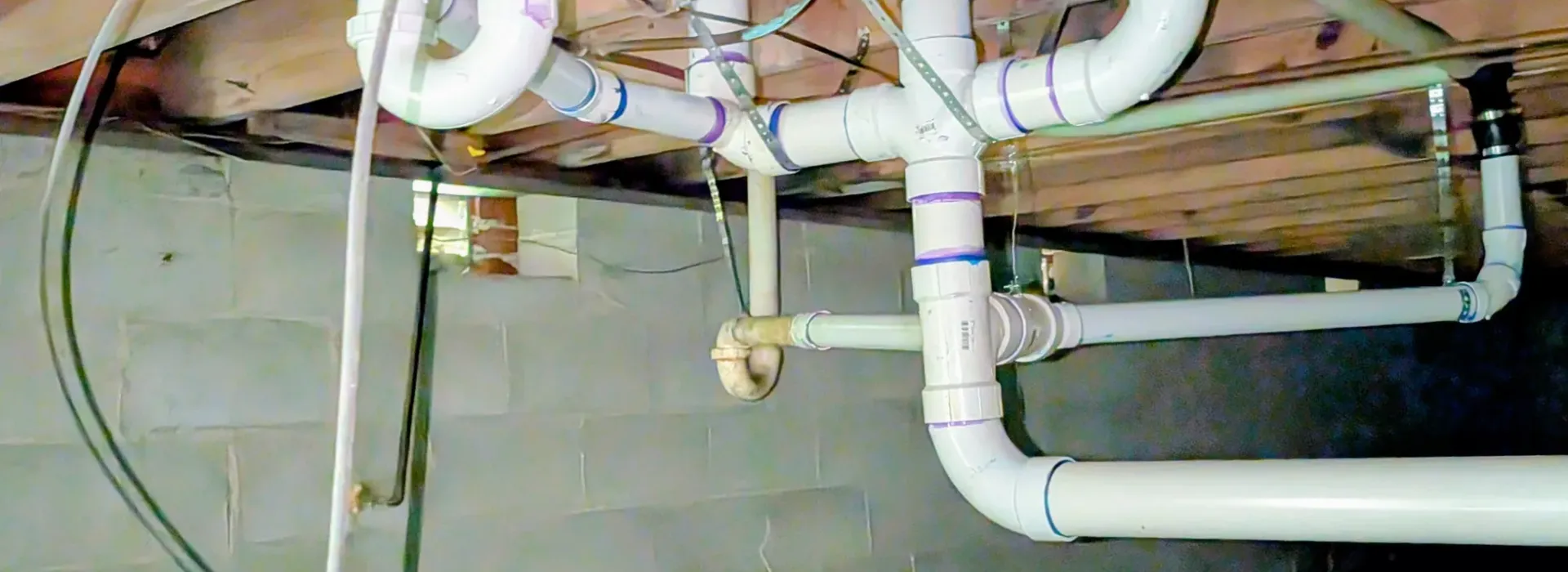
Repiping service in Little Rock, AR
Pipes leaking in more than one spot? Water pressure gone bad? Water coming out discolored? Diamond State Plumbing repipes homes in Little Rock. We're open 8AM to 5PM Monday to Friday. Call 501-585-5454 to stop patching the same pipes.
We handle whole-house repiping in Little Rock. When old galvanized or polybutylene pipe keeps leaking, fixing one section at a time stops making sense. Repiping replaces the old supply pipes in your home, all at once or one area at a time. It's a bigger project upfront, but it ends the cycle of patching the same old pipes.
Warning Signs Your Little Rock Home Needs Repiping
Half of Little Rock homes were built in 1978 or earlier. Homes built or replumbed from 1978 to the mid-1990s may have polybutylene instead. It's usually gray plastic, and it can fail from the inside where you can't see it.
Old galvanized can also hold lead in some homes, mainly if it once connected to a lead line. Central Arkansas Water's last round of tap tests found no sites over the lead action level. A water test tells you for sure about your home.
Watch for these signs:
- Rusty or brown water
- Low water pressure across the house
- Repeat leaks in walls or ceilings
- Pinhole leaks in copper pipe
- Discolored water that keeps coming back after you run the cold taps
- Banging pipes when a tap shuts off, which can mean water hammer or high pressure
Want a quick check? A magnet sticks to galvanized pipe but not to copper or plastic. We inspect your home and tell you exactly what we find. That way you know if you need a full repipe or just a repair, before any work starts.
Choosing Between PEX and Copper for Your Repipe
| PEX | Copper | |
|---|---|---|
| Install | Bends around corners with fewer fittings, so it goes in faster | Rigid pipe needs more fittings and joints |
| Install cost | Lower | Higher |
| Lifespan | About 40 years | Often lasts for decades |
| Corrosion and scale | Resists both | Relies on a thin protective film inside the pipe |
| Freezing | Usually stretches if water freezes, then returns to size | Rigid, so it can't stretch |
| Noise | Quieter when secured; absorbs pressure surges | Rigid pipe carries more noise |
PEX isn't designed for outdoor use, so any outside runs need a different plan. Little Rock hit -1°F in February 2021 and stayed at or below freezing for 210 straight hours (source). Cold snaps like that are hard on any pipe, and flexible pipe handles them better.
Many Pleasant Valley homes were built in the 1960s and 70s, so their original pipes are now 50 years old or more. If you're mid-renovation with walls already open, this is the easiest time to decide. We walk you through the trade-offs so you can choose what fits your home and budget.
Preparing Your Home for a Full or Partial Repipe
Here's what helps us get started right away:
- Clear a path to your walls, attic, and crawl space
- Move furniture and wall art away from work areas
- Tell us if your home sits on a slab, a crawl space, or pier-and-beam
- Plan for the water to be off during parts of the work
A repipe also needs a city plumbing permit before work starts. Permit timing varies, so we walk you through the schedule up front. You'll know your water shutoff plan and which rooms will see activity before we begin.
How a Whole-House or Room-by-Room Repipe Works
The first step is finding out which kind of job you need. Some homes have mixed plumbing, like polybutylene tied into copper lines that feed bathroom fixtures. So we check the whole run of pipe, not just the spot that's leaking.
| Whole-house repipe | Room-by-room or section repipe | |
|---|---|---|
| Best fit | Old galvanized or polybutylene throughout, with leaks in more than one spot | One area is failing and the rest of the pipe is sound |
| What gets replaced | All the supply lines in your home | Only the failing section |
| Testing | The full system is pressure tested | The new section is isolated and tested on its own |
| Time on the job | Typically two to seven days | Shorter, since fewer rooms are involved |
| Permit and inspection | City plumbing permit and inspection | City plumbing permit and inspection |
| Trade-off | Bigger project upfront | Older pipe left in place can keep leaking |
A section repipe can make sense when the rest of your pipe is in good shape. If the rest is just as old, a partial fix can leave it open to more leaks. We tell you which option fits after we see your pipes.
Here's how the job goes:
- We confirm which pipes need replacing.
- We shut off your water supply.
- We open only the walls or areas we need to reach the pipes.
- We remove or cap off the old pipe and run new PEX or copper.
- We pressure test the new lines for leaks.
- The City of Little Rock inspects the work.
- Walls get patched and the work area is cleaned up.
What to expect while we work:
- Some drywall or plaster gets opened so we can reach the pipes
- Your water is off during parts of the work
- More rooms with plumbing means more time on the job
- Walls stay open until the inspector signs off
Verifying Your New Pipes Pass Inspection
Here's what gets confirmed before the job closes out:
- The plumbing permit is in place
- The city inspector signs off on the work
- Every new line holds pressure with no leaks
Preventing Future Leaks After Repiping
Here's what helps your new pipes last:
- Let faucets drip and open sink cabinets on the coldest nights
- Insulate pipes in the attic, crawl space, and exterior walls
- Keep water pressure at or below 80 psi with a working pressure regulator
- Watch for any sudden change in water pressure or color
- Fix small leaks right away instead of waiting
Common Questions
Yes, if only one area is failing and the rest of your pipe is sound. We check the whole run of pipe first, since a partial fix on old pipe can leave it open to more leaks.
Most family homes take two to seven days, and larger homes can take longer. The number of rooms with plumbing and how easy the pipes are to reach both affect the timeline.
Yes, we only open the walls we need to reach your pipes. Those openings stay open until the city inspector signs off, then they get patched.
Only if your copper is showing signs of failure. Copper often lasts for decades, but repeat pinhole leaks mean it's time to have your pipes checked.
Clear a path to your walls, attic, and crawl space, and move furniture and wall art away from work areas. Easier access helps the job go faster.
Yes, permitted repipe work in Little Rock has to pass a city inspection. Permits come from the city's Building Codes Division, and the inspection happens before walls get patched.

Why Local Matters
For Your Plumbing




Why Local Matters
For Your Plumbing
You could call a big national chain. They'll probably charge you more and send someone who doesn't know Little Rock. Local plumbers understand that homes in Pulaski Heights have different plumbing than new builds in West Little Rock. They know which neighborhoods have older plumbing prone to mineral buildup and which areas tend to have foundation shifts that affect plumbing.
When you call a local company, you get someone who answers the phone and can usually tell you right away what's probably happening and when they can get there. No automated system. No waiting on hold for 20 minutes.
Response times are better too. A local plumber is 15 minutes away, not coming from another city. If you've got a burst pipe or sewage backing up, those minutes matter. Plus, local companies know the city inspectors, understand Little Rock's specific codes, and can get permits processed faster. When you need plumbing work done right and done quickly, local is the way to go.
 Licensed, Bonded & Insured
Get In Touch
Have any questions? Contact us today for expert services in Little Rock and neighboring communities. Let us handle your plumbing needs!